Invasive species: can reframing the problem become an excuse for inaction?
Of late, I have seen posts on social media and in the news casting invasive species as victims of human displacement, or describing their usefulness and suggesting we better recognize their value along with the harm they cause.
This reframing is, in part, a response to the militaristic language long used around invasive species—and I share that discomfort. But while reframing the problem can give us insights, it can also provide us excuses for inaction.
Let’s have a conversation, shall we?
Hello, emerald ash borer.
My, you are attractive, all that metallic green. And your surname? Agrilus. Well, welcome. I’ve met some of your relatives, the bronze birch borer and the two-lined chestnut borer. Sorry you accidentally got into that shipping crate. But you will find a home here. You will add to our diversity.
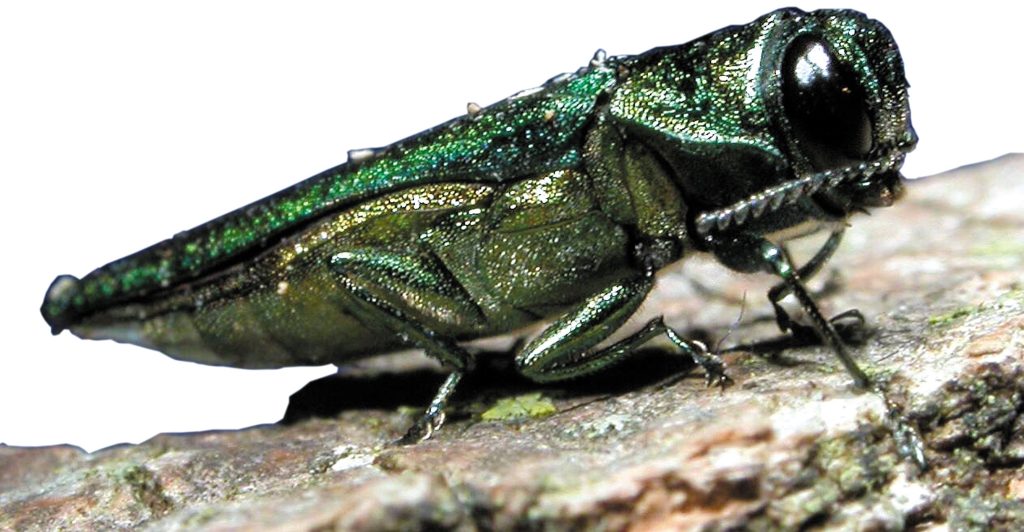
from https://inspection.canada.ca/en/plant-health/invasive-pests-and-plants/insects/emerald-ash-borer
Emerald ash borer has indeed added one species to Canada’s species count, yet it is harming a great many more. Near where the beetle first became established, in southeast Michigan, more than 99 percent of ash trees over 2.5 cm in diameter have been killed. At least 282 arthropod species feed on ash in North America, and at least 43 of them are native species that feed on ash alone. When the ash goes, they go with it.
Stopping emerald ash borer is no longer possible, but most would agree that slowing its spread, and keeping out other similarly harmful species, is essential if we want to protect the species and ecological relationships that are here. We generally agree on this course of action for species like emerald ash borer because we encounter them primarily through the harm they cause. We don’t spend much time asking what the beetle might offer us.
Yet we ask that question readily when the invasive species is a plant we chose to bring here through the horticultural trades.
Hello, buckthorn.
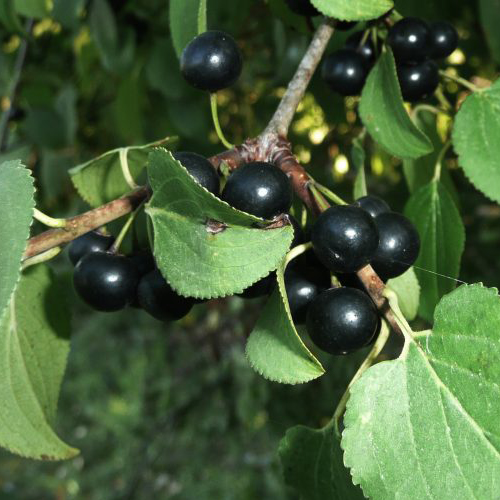
My, you are attractive. Those glossy green leaves, those abundant dark berries. And your surname? Rhamnus. I’ll just move a few of you across the ocean and plant you in my garden. I’ve met your relative, alder-leaved buckthorn. She’s from here. You’re just another buckthorn. You will fit right into our landscape.
Except that isn’t quite how invasion biology works.
Common buckthorn (Rhamnus cathartica) isn’t simply another member of its genus taking its place in a hedgerow. It spreads and multiplies. It tolerates shade, grows quickly in the understory of woodlands, leafs out early and holds its leaves late into the fall.
Where buckthorn forms dense stands, it shades the forest floor, alters soil conditions and interferes with the regeneration of native trees. There is no dramatic moment of destruction. Nothing falls over. The next generation of the forest simply fails to appear.
We readily notice the vibrant buckthorn and its pretty berries, but we rarely notice the quiet absence of everything else. Yet those missing lives have value too.
Indigenous environmental scientist Jessica Hernandez writes, “we acknowledge them as displaced relatives rather than invasive species, since at the end of the day, they are also someone’s plant relatives.” She is describing her own community’s way of relating to these plants, and I offer it here with respect. It reminds us that these plants did not arrive on their own, and that everything here exists in relationship. But if we enlarge our circle of kinship to include introduced species, we must not accidentally shrink our circle of concern for everything already living around them.
Invasive species are not inherently “good” or “bad.” Buckthorn is not a villain, and caring for the land should not mean an endless war with pests and weeds. But neither does recognizing the value of species, or their relatedness, mean every organism should be allowed to reproduce and spread unchecked. We manage buckthorn because of what disappears when it spreads.
Integration?
Some of the voices arguing for a less militaristic response to invasive plants belong to people who know what it is to be the newcomer. They rightfully feel anxious about parallels between the language around invasive species and the demonization of human immigrants.
Artist Mayuko Fujino, who paints with pigments from buckthorn and other introduced plants, asks whether some invasive plants might integrate, as she did, with enough help. Here, there is an important distinction to be made. Many, if not most, introduced species do settle in with little harm. Others, like buckthorn, change the community around them faster than it can adjust. Over time new relationships will form, but many will be lost. Here we must seek an uneasy balance.
Fujino writes that decisions about what belongs are “sometimes… necessary,” but “deserve to be questioned.” I agree.
Benefits to whom?
finding a use for an
Cathy Kavassalis
invasive species
does not make its spread
generally beneficial
Our rules for introduced plants were shaped by the same settler values that first brought these plants here, values that treat plants as goods to trade, and they still allow new ones to be imported and sold regardless of how they impact other species. Those values deserve to be questioned.
Before a plant is designated invasive, authorities weigh its benefits against its potential harm to the economy, the environment and public well-being. Currently, that framework leans heavily toward protecting the marketplace and a gardening tradition, inherited with settlement, that values pretty plants over healthy ecosystems. The federal government’s long inaction on sales of Japanese barberry, which it acknowledges is invasive, is a case in point. We look for benefits so we don’t have to assume responsibility for a problem we caused.
But benefits to whom? The trunk of a dead ash can become a sculpture. An emerald ash borer can be a meal for a woodpecker. A buckthorn berry can give an artist pigment and be a meal for a bird. All of that can be true. But a benefit to an artist, or to an organism is not a benefit to the whole community, and finding a use for an invasive species does not make its spread generally beneficial.
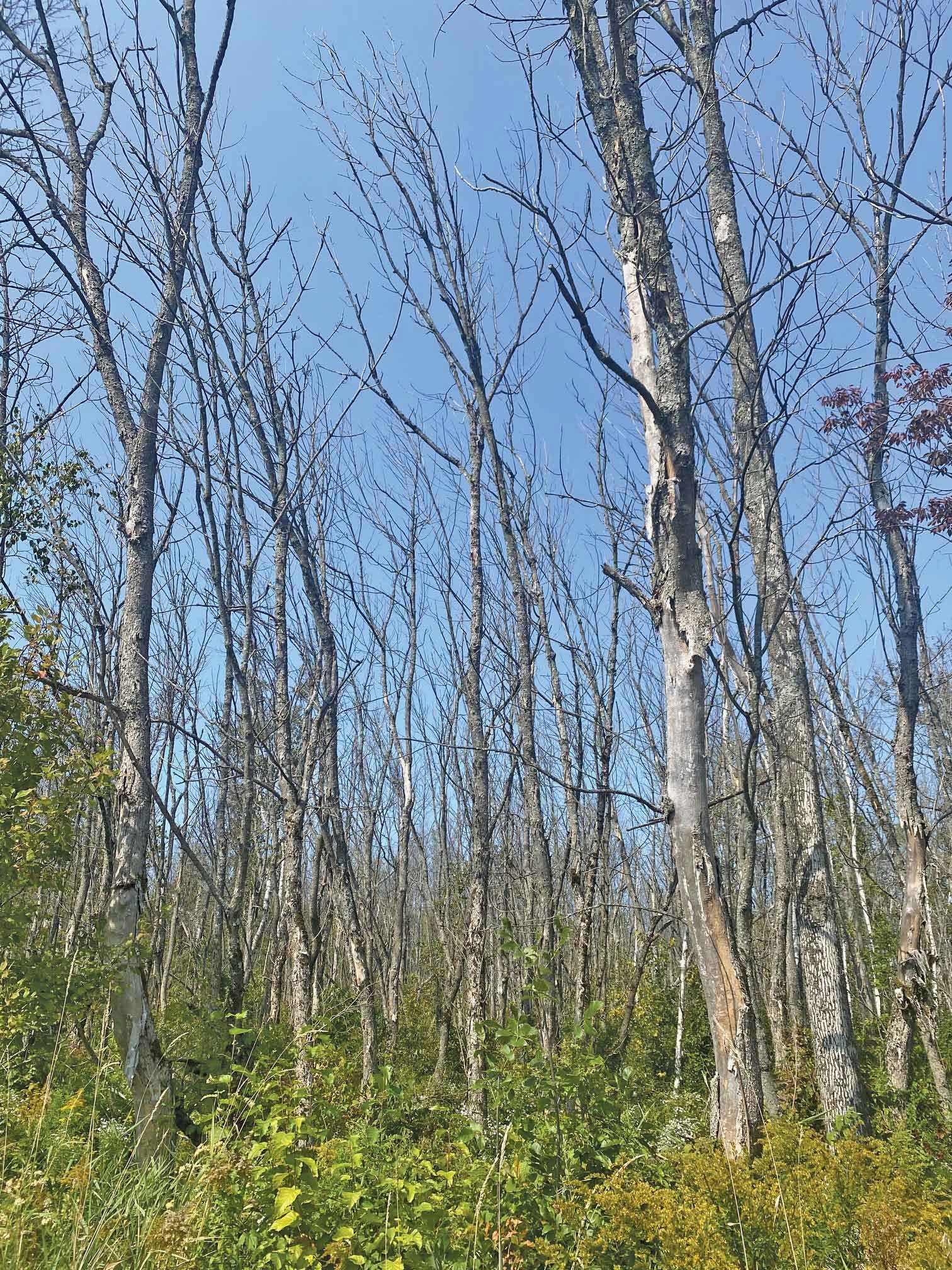
The trouble is that humans are poor judges of slow consequences. The harm caused by emerald ash borer is easily visible: we watch the trees die. But ecological costs associated with invasive plants often arrive slowly, over decades, and fall on future generations outside our immediate sphere of care. We discount slow harm, with climate change and with invasive plants alike.
Emerald ash borer did not choose to cross the ocean; buckthorn did not choose to be planted. People made those choices. Because we bear the responsibility for their introduction, we bear the responsibility for what happens next.
For buckthorn, honouring that responsibility can be both practical and profound. It means learning to recognize it, noticing how its leaves stay stubbornly green in late fall after most native shrubs have dropped theirs. It means tending the land: pulling seedlings, seeking guidance on larger shrubs that resprout when cut, and planting native kin in the spaces left behind.
And before we add any new plant to a landscape, it means asking a generational question: are we willing to stay around to manage, heal and tend this landscape into the future?
Human responsibility
But individual care has limits. We cannot pull our way out of a problem that is still arriving and growing through trade. When emerald ash borer arrived, we regulated it, restricting the movement of firewood and ash wood.
For plants, we have been far slower. Many species known to be invasive can still be legally imported, sold and moved in Canada. If we are responsible for what we move, that responsibility belongs in law as well as in our gardens: preventing the import, sale and movement of harmful species, and requiring their management where it is possible.
So yes, paint with its berries. Make the ink. Admire the glossy leaves. Then take one more step, and pull the seedling coming up at the woodland’s edge.
Recognizing value does not equate with accepting harm.
Recognizing our relationships with other species means accepting responsibility for the impacts of our choices.
The tree seedling that never took root, the wildflower that lost its light, and the insects and birds that depended on them. They are relatives too.
Sources and further reading
Emerald ash borer
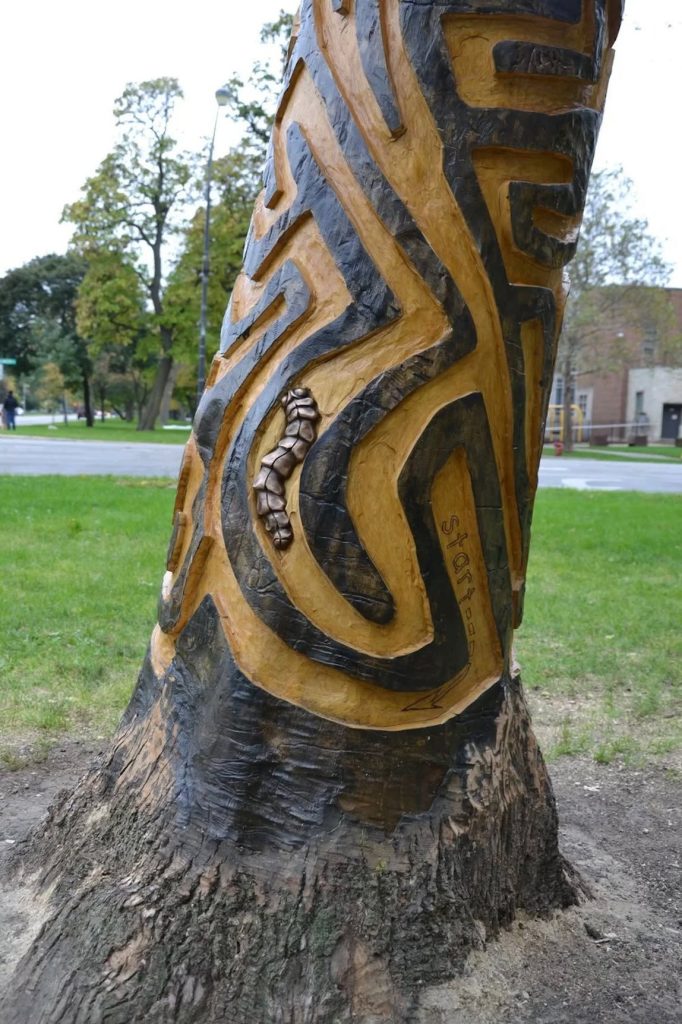
Artist: Janet Austin
Media: Dying Ash Tree, bronze larvae
The dying ash tree is embellished with a maze carved into the trunk.
https://www.janetaustinart.com/view-work/the-amazeing-larvae-of-the-emerald-ash-borer
Herms, D.A. and McCullough, D.G. (2014). Emerald ash borer invasion of North America: history, biology, ecology, impacts, and management. Annual Review of Entomology 59: 13–30. Source for the ash mortality and arthropod figures, which it reports from Gandhi and Herms (2010), Biological Invasions 12: 1839–1846. https://doi.org/10.1146/annurev-ento-011613-162051
Canadian Food Inspection Agency (2026). Areas regulated for the emerald ash borer. Movement of ash firewood, logs, lumber and wood chips out of regulated areas is prohibited without CFIA approval. https://inspection.canada.ca/…/03-08/regulated-areas
Common buckthorn and barberry
Ontario Invasive Plant Council. Common buckthorn. https://www.ontarioinvasiveplants.ca/…/species/buckthorn/
Ontario Invasive Plant Council (2024). Common Buckthorn Technical Bulletin. https://www.ontarioinvasiveplants.ca/…/Buckthorn…
Knight, K.S. et al. (2007). Ecology and ecosystem impacts of common buckthorn (Rhamnus cathartica): a review. Biological Invasions 9: 925–937. https://doi.org/10.1007/s10530-007-9091-3
Schmidt, K.A. and Whelan, C.J. (1999). Effects of exotic Lonicera and Rhamnus on songbird nest predation. Conservation Biology 13: 1502–1506. Robins nesting in buckthorn and honeysuckle lost more nests to predators: a benefit to a bird that turns out to be a cost. https://scholars.ttu.edu/en/publications/effects-of-exotic-lonicera-and-rhamnus-on-songbird-nest-predation
Canadian Food Inspection Agency (2022). RMD-21-02: Pest risk management document for barberry (Berberis, Mahoberberis and Mahonia spp.) as a biological obstacle to the control of black stem rust (Puccinia graminis). States that Japanese barberry “is considered invasive in most of the eastern Canadian provinces (Nova Scotia, Ontario, Prince Edward Island and Québec)”, while regulating barberry for stem rust rather than invasiveness. https://inspection.canada.ca/eng/1653418602687/1653418603218
Indigenous perspectives
Hernandez, J. (2022). Fresh Banana Leaves: Healing Indigenous Landscapes Through Indigenous Science. North Atlantic Books. Free excerpt: https://www.rewildingmag.com/invasive-species-as-a…/
Arnold, C. (2025). How can we re-envision care for weeds? Indigenous weed management on the Shoalhaven River. People and Nature 7: 2334–2345. Open access. A relational ethic of care that includes careful removal. https://doi.org/10.1002/pan3.70138
Art and invasive plants
Fujino, M. (2026). For Integration, Against Demonization. Beakuency (Substack), March 24, 2026. https://beakuency.substack.com/…/for-integration…
Language and the wider debate
Reeb, R.A. and Heberling, J.M. (2025). Lost in translation: the need for updated messaging strategies in invasion biology communication. Plants, People, Planet 7: 536–545. Open access. Two invasion biologists on why war language and fear backfire, and why the science still holds. https://doi.org/10.1002/ppp3.10603
Davis, M.A. et al. (2011). Don’t judge species on their origins. Nature 474: 153–154. https://doi.org/10.1038/474153a
Simberloff, D. et al. (2011). Non-natives: 141 scientists object. Nature 475: 36. The reply to Davis et al.; best read as a pair. https://doi.org/10.1038/475036a
Richardson, D.M. and Ricciardi, A. (2013). Misleading criticisms of invasion science: a field guide. Diversity and Distributions 19: 1461–1467. Common objections and the evidence against each. https://doi.org/10.1111/ddi.12150