Fatal attraction: an intense draw to something that ultimately leads to disaster, destruction, or the end of a relationship.
I marvel at the ingenuity of the plant world. Rooted in place, plants can’t go looking for food, seek a mate, or flee from herbivores. Instead, they have evolved extraordinary ways of getting other organisms to come to them.
Many plants enlist animals to carry their pollen, disperse their seeds, or provide defence. Flowers advertise with colour, shape and scent. Nectar, pollen and fruits provide rewards. These attractions benefit the plant and its animal visitors. Or not . . .
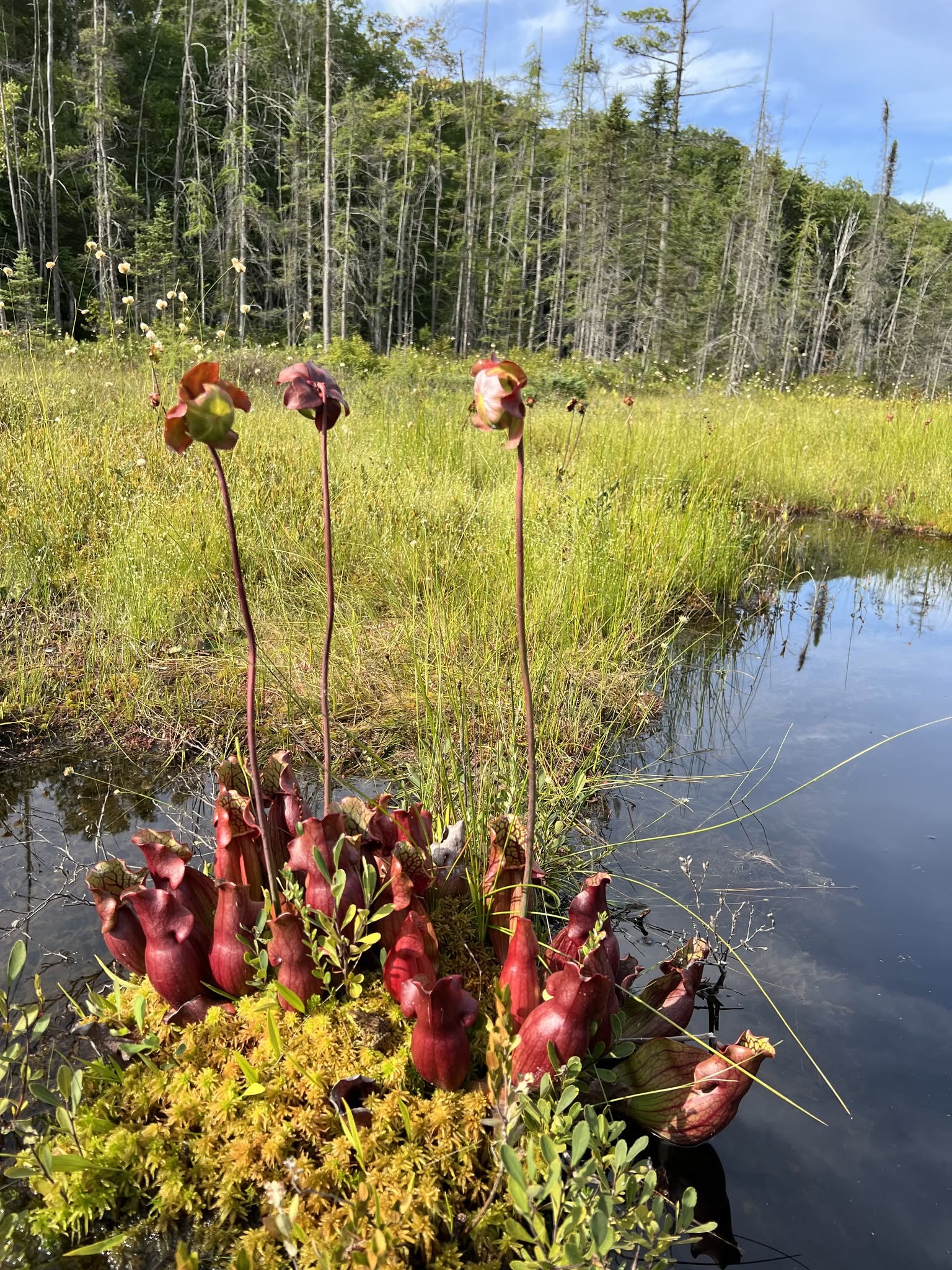
Not when a plant lures visitors into the arms of a waiting crab spider or ambush bug. And certainly not when the plant itself makes a meal of its visitors. We have several native carnivorous plants, like the purple pitcher plant (Sarracenia purpurea) and our sundews (Drosera spp.).
Sometimes, an attraction is an ecological trap.
A fatal case of mistaken identity
Click image to enlarge
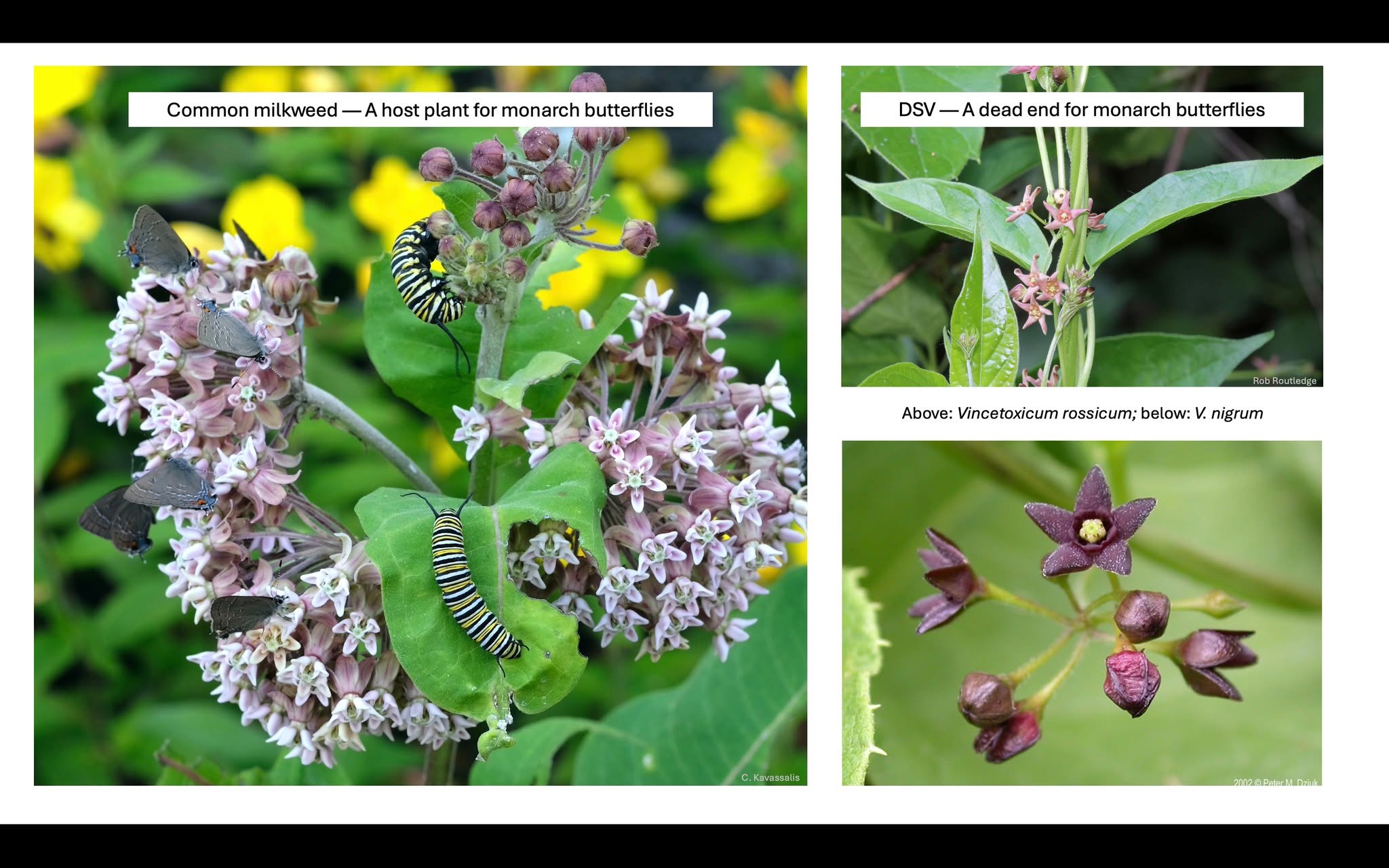
Dog-strangling vine, also known as swallow-wort (Vincetoxicum spp.), is an invasive plant closely related to our native milkweeds (Asclepias spp.). Monarch butterflies sometimes lay their eggs on it, especially where milkweed is scarce. We don’t fully understand why, but cues shared with milkweed are the likely explanation.
The caterpillars hatch, begin to feed and die within days. For each egg laid there, it is a dead end.
Attraction and breeding success
But what happens when one plant is exceptionally good at attracting pollinators?
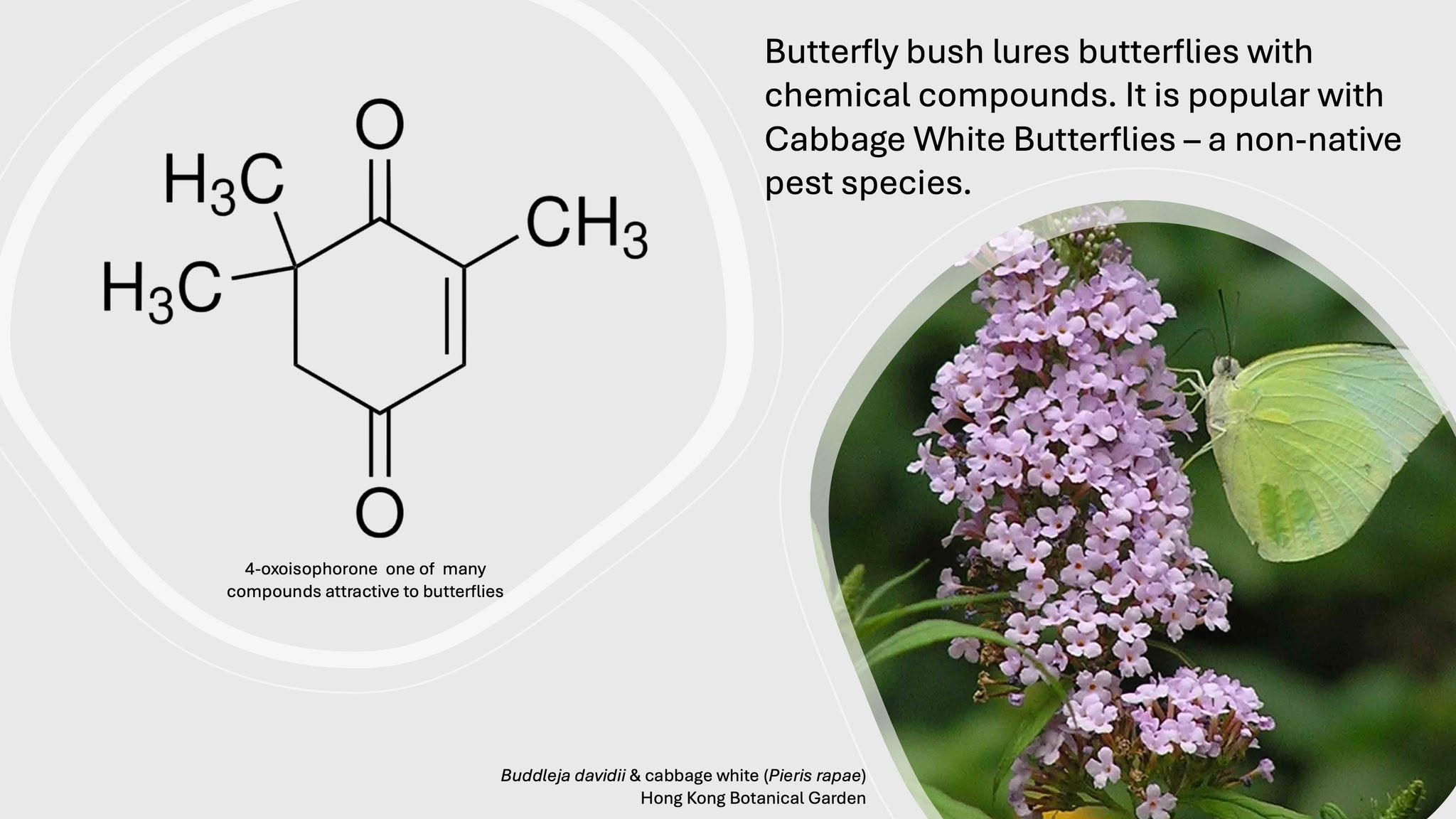
Consider butterfly bush, Buddleja davidii. Its reputation as a butterfly magnet is well deserved. The plant produces volatile organic compounds such as 4-oxoisophorone and oxoisophorone epoxide that lure butterflies to its floral rewards. The plant is an extraordinarily effective advertiser.
click image to enlarge
And for the butterfly bush, that is a very successful strategy. Butterfly bush, because it does not readily self-pollinate, depends on insect visitors for reproduction. More visits can mean more opportunities for pollination and seed production.
It can produce enormous numbers of small, winged seeds that are dispersed by wind and water. Long flowering periods, prolific seed production, easy germination, and vigorous growth have all contributed to its ability to establish beyond cultivation and become invasive in many parts of the world. Its attraction is part of its success, sometimes at the expense of other species.
A relationship breaker?
click image to enlarge
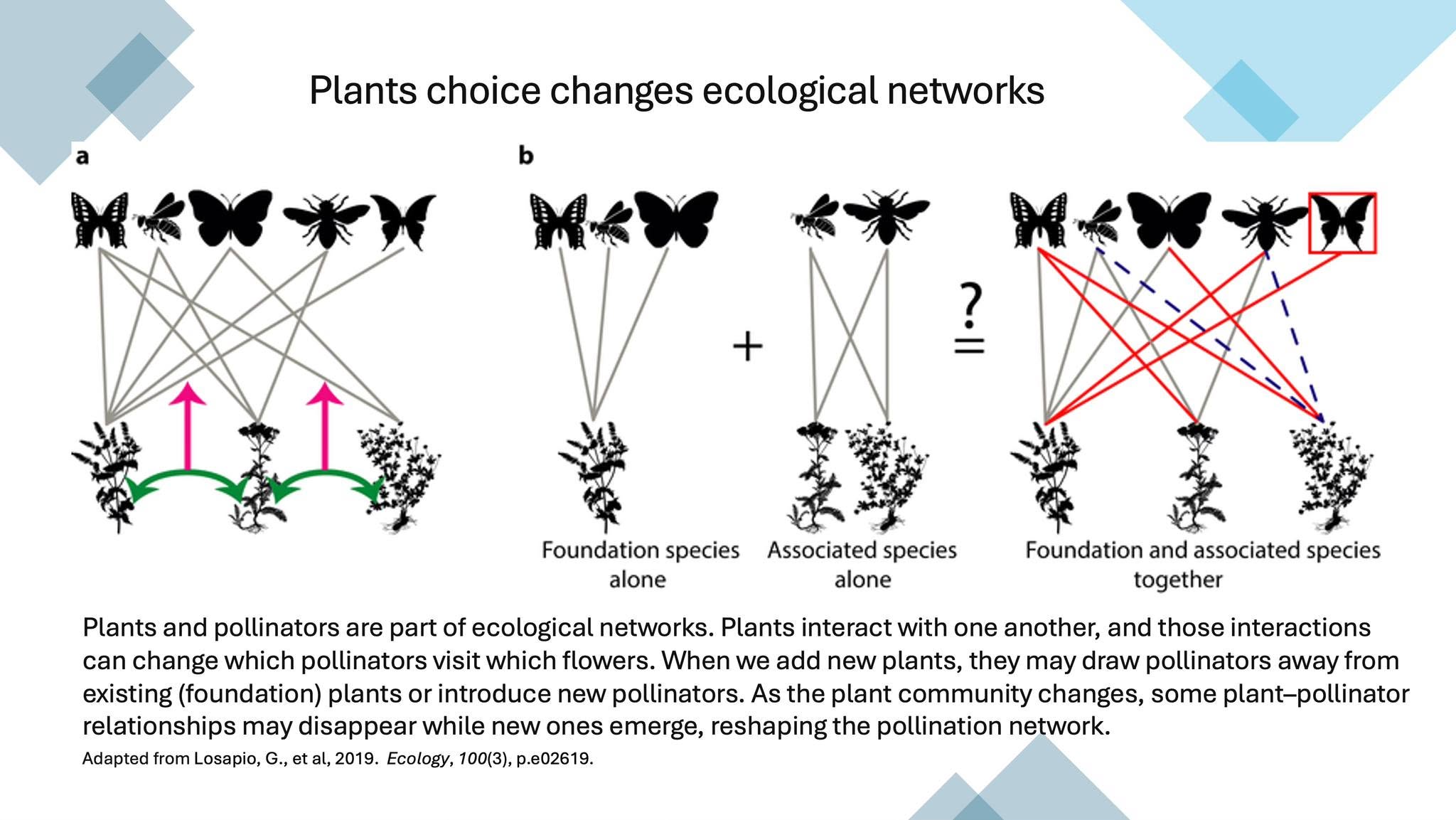
A pollinator doesn’t live on a single plant. It lives in a community of plants.
When one plant commands attention, what happens to the others?
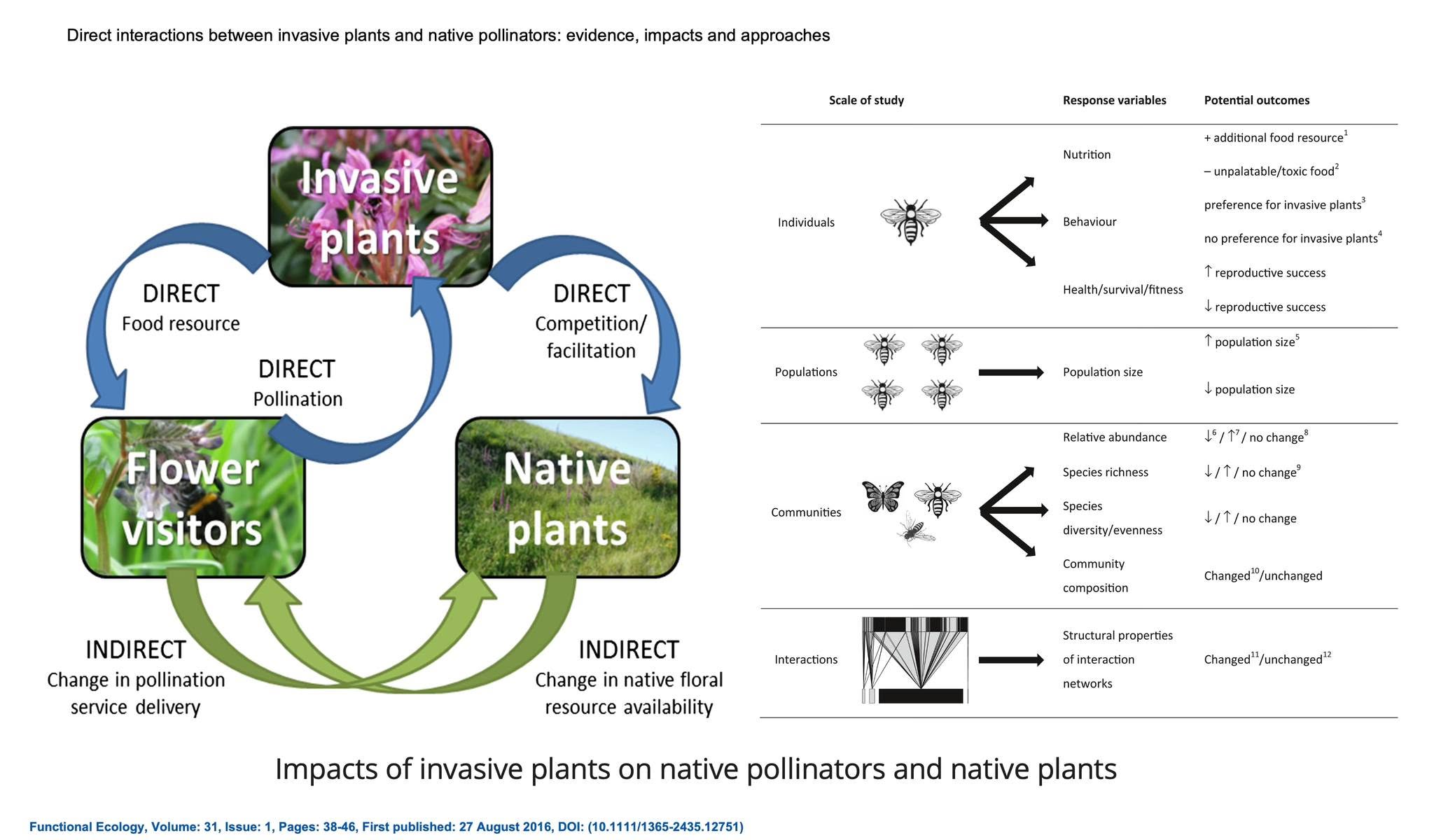
Competition for pollinators does matter. Purple loosestrife (Lythrum salicaria), a familiar invader of Ontario wetlands, has been found to draw pollinators away from its native relative, winged loosestrife (Lythrum alatum), reducing visits and seed production in the native plant. Research has also found that where purple loosestrife is abundant, the native monkey-flower (Mimulus ringens) produces fewer seeds.
An irresistible neighbour like purple loosestrife can quietly change which plants get pollinated and which don’t. Which plants reproduce well, and which don’t.
Are plants that attract pollinators good for pollinators?
To be honest, some plants are jerks. Some advertise rewards and then fail to deliver.
Here’s a new word for you: pseudoanthery, or fake anthers. Begonias produce separate male and female flowers on the same plant. The male flowers offer pollen as a reward. The female flowers offer nothing (no sweet treats), but their stigmas mimic the pollen-laden anthers of the males, fooling pollen-collecting bees. Researchers call this intersexual mimicry.
The plant saves resources while still producing enough genuine pollen to keep pollinators coming. It’s deceptive, but not fatal.
However, even when a plant genuinely provides abundant nectar or pollen, abundance tells us little about quality.
Click image to enlarge.
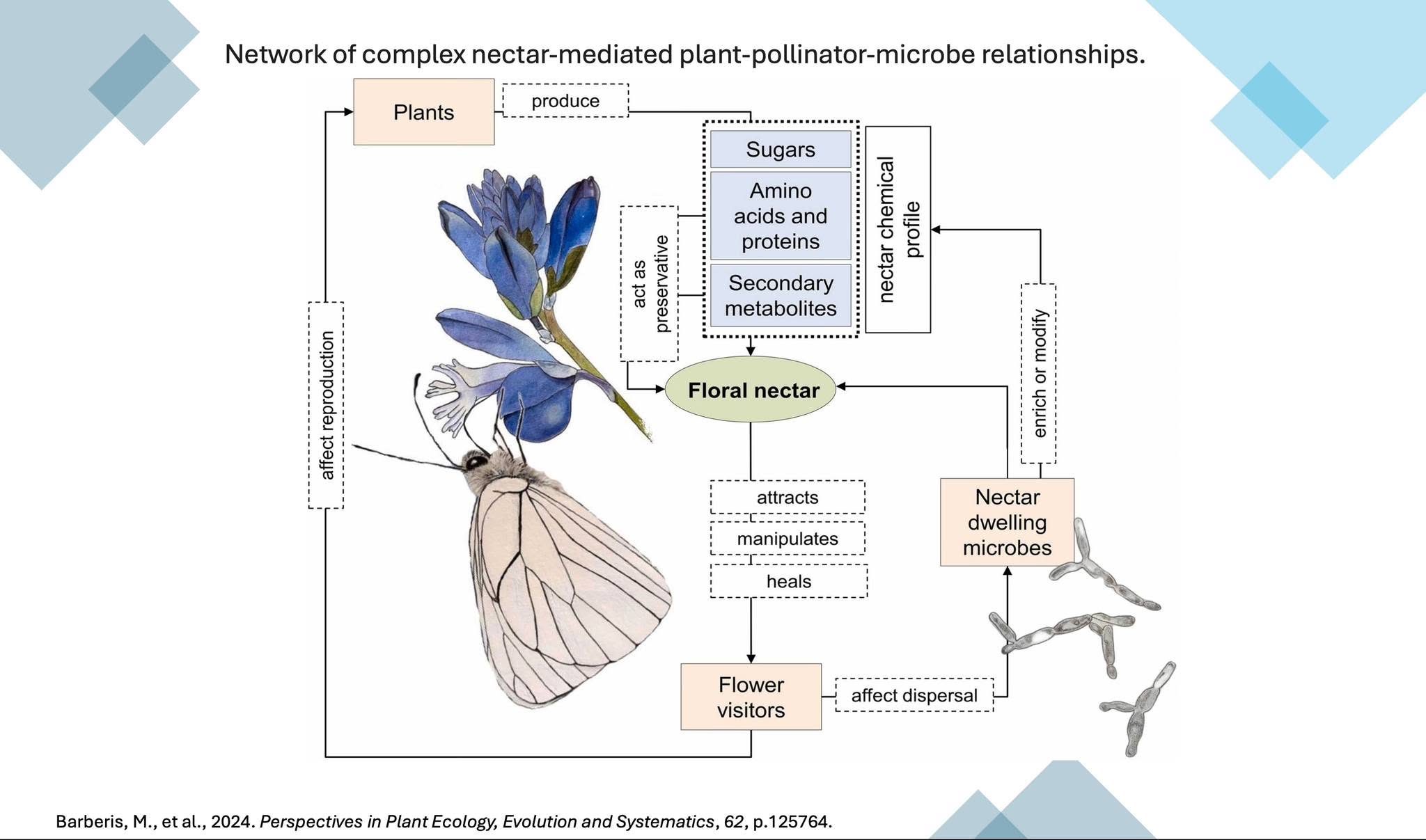
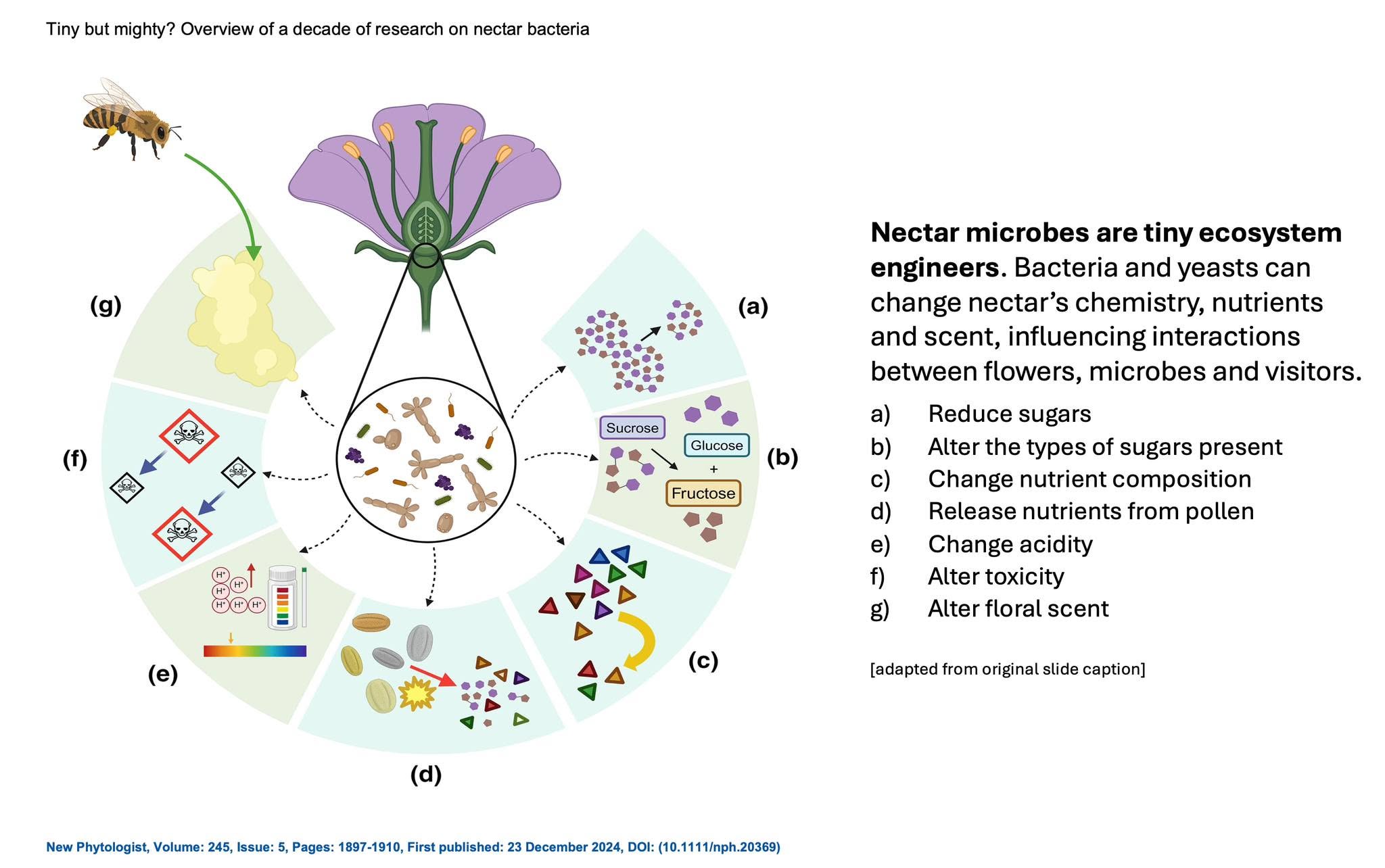
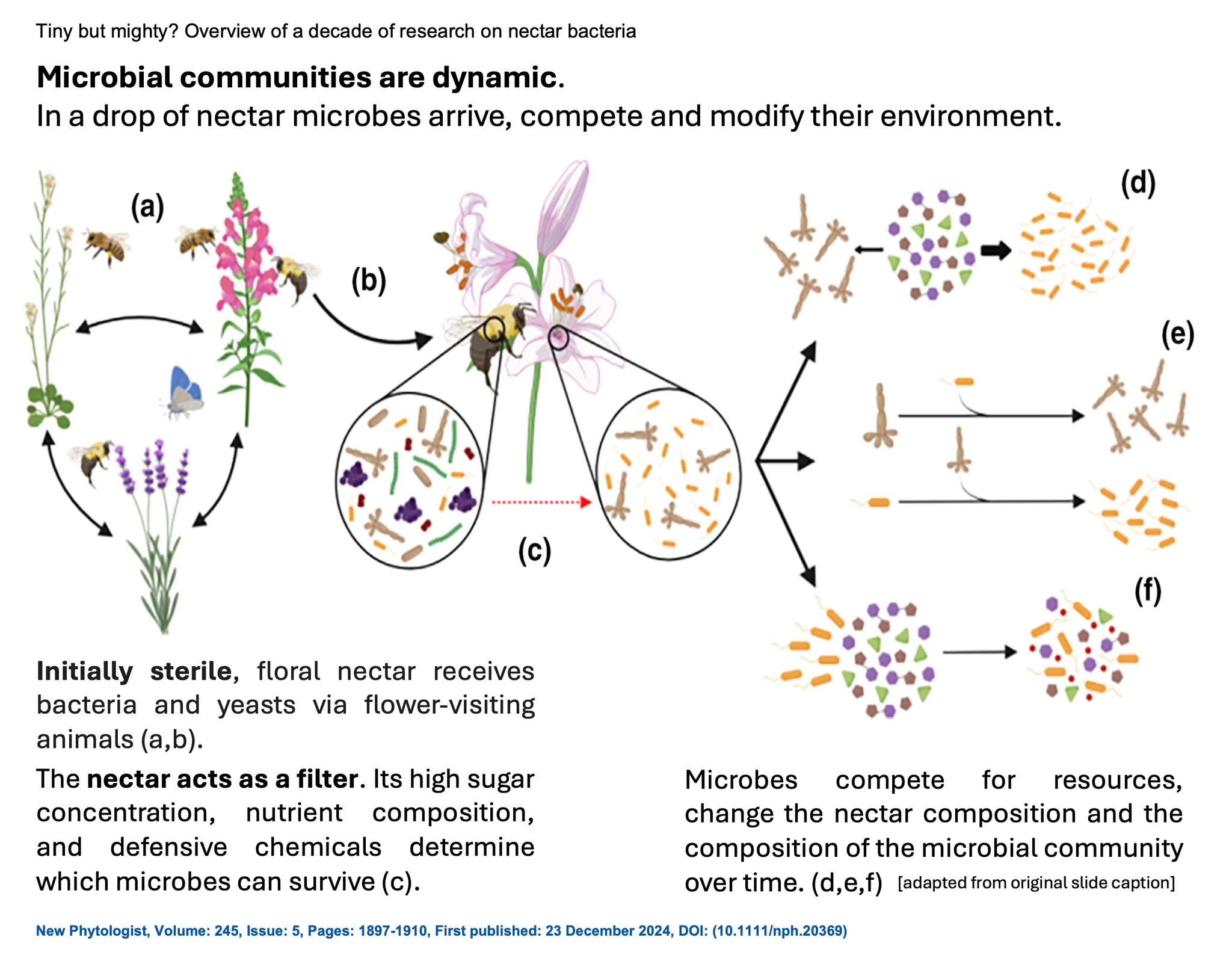
We often talk about nectar as if it were simply sugar water. It isn’t. Nectar is a complex and changing mixture of sugars, amino acids, minerals, and secondary compounds. It can also harbour yeasts and bacteria that alter its chemistry and scent, potentially influencing the behaviour of the animals that consume it.
Pollen varies considerably in nutritional composition too. Different plants provide different amounts and proportions of proteins, amino acids, lipids and other nutrients. Some pollen even contains toxins that deter palynivory (pollen consumption).
So an alluring scent and abundant nectar or pollen don’t tell us the whole story. A plant can be very good at getting a butterfly, bee or bird to the table without necessarily providing everything that creature, or its offspring, needs.
Beyond counting visitors
We celebrate plants covered in bees, butterflies or birds. We count the visitors, photograph them and call the plants pollinator-friendly or bird-friendly.
But attraction is only the first measure.
Perhaps some better questions :
- Which species does it serve, and what are they consuming?
- Does it support their offspring?
- What does it replace or displace, in the garden and beyond?
- Does it meet the needs of a diversity of species, or mainly the species we happen to notice?
- Could a different plant, one that belongs to the ecological community of this place, provide the same or greater benefit?
We don’t have all the answers, but asking questions and seeking answers is important.
We know that plants can reshape pollination networks, but we know far less about how our garden choices might affect resource quality and communities of life over time.
Is attractiveness a virtue?
In nature, attraction is a strategy. Sometimes it leads to pollination. Sometimes it leads to predation or deception. And sometimes it reshapes relationships we barely notice.
We are attracted to pretty plants. And when those plants attract butterflies, bees or birds, so much the better. But attraction does not always lead to positive ends.
If our attraction to a plant ends up displacing other plants, disrupting ecological relationships or spreading an invasive species, perhaps we should ask ourselves:
Is this a fatal attraction?
Some reading for the curious
Dog-strangling vine and monarchs
- Casagrande, R.A. and J.E. Dacey. 2007. Monarch butterfly oviposition on swallow-worts (Vincetoxicumspp.). Environmental Entomology 36(3): 631–636. https://academic.oup.com/ee/article/36/3/631/406797
- Mattila, H.R. and G.W. Otis. 2003. A comparison of the host preference of monarch butterflies (Danaus plexippus) for milkweed (Asclepias syriaca) over dog-strangler vine (Vincetoxicum rossicum). Entomologia Experimentalis et Applicata. https://onlinelibrary.wiley.com/…/j.1570-7458.2003.00049.x
- Ontario Invasive Plant Council. 2025. Dog-strangling Vine Technical Bulletin. https://www.ontarioinvasiveplants.ca/…/Dog_Strangling…
Butterfly bush
- Lehner, M.S., S. Schulz and S. Dötterl. 2022. The mystery of the butterfly bush Buddleja davidii: How are the butterflies attracted? Frontiers in Plant Science. https://www.frontiersin.org/journals/plant-science/articles/10.3389/fpls.2022.994851/full
- Tallent-Halsell, N.G. and M.S. Watt. 2009. The invasive Buddleja davidii (butterfly bush). Botanical Review. https://cfpub.epa.gov/si/si_public_file_download.cfm…
Competition for pollinators and invasive plants and pollinator networks
- Brown, B.J., R.J. Mitchell and S.A. Graham. 2002. Competition for pollination between an invasive species (purple loosestrife) and a native congener. Ecology 83: 2328–2336. https://esajournals.onlinelibrary.wiley.com/doi/10.1890/0012-9658(2002)083%5B2328:CFPBAI%5D2.0.CO;2
- Flanagan, R.J., R.J. Mitchell and J.D. Karron. 2010. Increased relative abundance of an invasive competitor for pollination, Lythrum salicaria, reduces seed number in Mimulus ringens. Oecologia. https://link.springer.com/article/10.1007/s00442-010-1693-2
- Stout, J. C., & Tiedeken, E. J. 2017. Direct interactions between invasive plants and native pollinators: evidence, impacts and approaches. Functional Ecology, 31(1), 38-46. https://besjournals.onlinelibrary.wiley.com/…/1365-2435…
- Losapio, G., Fortuna, M.A., Bascompte, J., Schmid, B., Michalet, R., Neumeyer, R., Castro, L., Cerretti, P., Germann, C., Haenni, J.P. and Klopfstein, S., 2019. Plant interactions shape pollination networks via nonadditive effects. Ecology, 100(3), p.e02619 https://esajournals.onlinelibrary.wiley.com/…/ecy.2619
Deceptive flowers
- Castillo, R.A. et al. 2012. How to cheat when you cannot lie? Deceit pollination in Begonia gracilis. Oecologia. https://link.springer.com/article/10.1007/s00442-012-2250-y
- In Defense of Plants. Pseudoanthry. https://www.indefenseofplants.com/…/2017/1/25/pseudoanthry
Nectar, pollen and nutrition
- Barberis, M., et al., 2024. Floral nectar: fifty years of new ecological perspectives beyond pollinator reward. Perspectives in Plant Ecology, Evolution and Systematics, 62, p.125764. https://www.sciencedirect.com/…/pii/S1433831923000483 Vannette, R.L. 2020. The floral microbiome: plant, pollinator, and microbial perspectives. Annual Review of Ecology, Evolution, and Systematics 51. https://www.annualreviews.org/…/annurev-ecolsys-011720…
- Vaudo, A.D., J.F. Tooker, C.M. Grozinger and H.M. Patch. 2015. Bee nutrition and floral resource restoration. Current Opinion in Insect Science 10: 133–141. https://www.sciencedirect.com/science/article/abs/pii/S2214574515000875
- Rivest, S. and J.R.K. Forrest. 2020. Defence compounds in pollen: why do they occur and how do they affect the ecology and evolution of bees? New Phytologist 225: 1053–1064. https://nph.onlinelibrary.wiley.com/doi/abs/10.1111/nph.16230