
Working Together to Prevent the Spread of Invasive Plants in Canada
The Canadian Coalition for Invasive Plant Regulation (CCIPR) brings together gardeners, Master Gardeners, scientists, educators, and community organizations committed to reducing—and ultimately preventing—the sale and spread of invasive plants in Canada.
Take Action →
Join the Coalition →
Read Our Roadmap for Change →
Why We Must Act
Invasive plants threaten biodiversity, disrupt food webs, increase health and safety risks, and impose escalating costs on communities. Prevention protects ecosystems, people, and economies—and it is the most effective solution.
How Invasive Plants Spread
Most invasive plants now found in Canada were introduced through the horticultural and aquatic trades. Once planted, many escape into natural areas through wind, wildlife, yard waste, soil movement, pets, and vehicles.
Understanding these pathways helps us choose better practices—and prevent future introductions.
CCIPR’s Solutions
Canada needs coordinated, science-based action to address invasive plants at the source. CCIPR’s Roadmap for Change outlines practical steps that support gardeners, growers, retailers, municipalities, and regulators.
Federal Actions Needed
- National Governance: A permanent inter-jurisdictional body to coordinate prevention
- A Shared Plant-Risk Database: Reliable evidence to guide decision-making
- Mandatory Risk Screening: Evaluate new imports and review species already in trade
- Legislative Modernization: Restrict high-risk species and strengthen labelling
- An Industry Accord: Work with horticulture to phase out invasive plants
- Education & Outreach: Clear, accessible guidance for Canadians
Additional Measures Needed
- Stronger provincial and territorial regulation
- Municipal tools and bylaws to reduce spread
- A responsible, regionally appropriate nursery trade
Read Our 2023 Report → Reducing the Sales of Invasive Plants in Canada: To Safeguard Biodiversity and Human Health
Take Action
Preventing the spread of invasive plants depends on everyday choices. Whether you are a gardener, educator, land steward, or part of the nursery trade, your actions matter.
- Learn which plants pose the highest risk
- Lead by example – choose native or non-invasive plants
- Educate and engage others
- Contact local representatives to request stronger regulation
- Talk to your nursery or landscape professional
Invasive Plant Lists
Canadians need reliable information on which plants pose risks. We provide links to trusted invasive plant lists and regional resources used by gardeners, municipalities, land stewards, and conservation groups.
A Better Path Forward for the Nursery Trades
Canada’s horticulture sector has the opportunity to lead. By shifting toward responsible, regionally appropriate plant choices, growers and retailers can support biodiversity, reduce long-term management costs, and strengthen local economies.
Ecological Costs and Consequences
Invasive Alien Plant Species (IAPS) cause harm to the environment, the economy and human health. They can impact agriculture, forestry, recreation, biodiversity, ecosystem health, and public health. Control of these species costs hundreds of millions of dollars annually. Additionally, there are the inestimable costs to our natural environment — our life support system.
Invasive plants can:
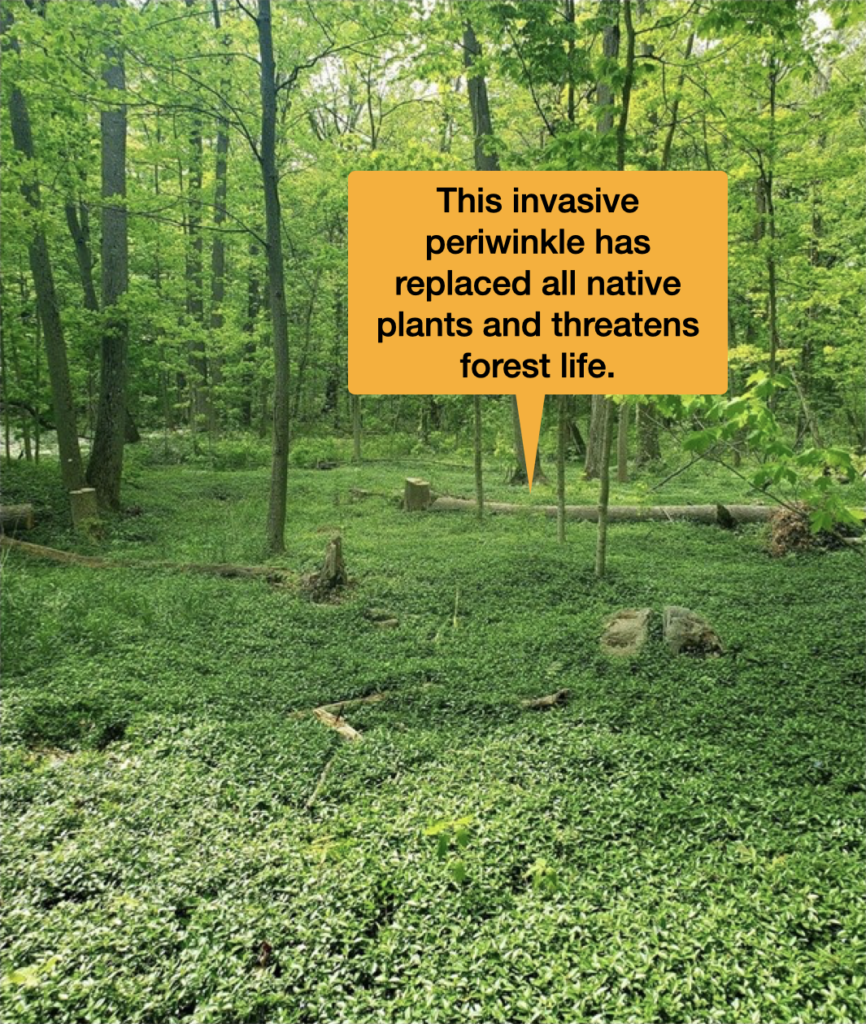
- Suppress or displace native plant species
- Disrupt essential food webs and impact wildlife
- Change litter decomposition, soil formation, soil chemistry and the distribution of soil organisms
- Reduce the availability of resources, like water or nutrients
- Impair essential ecosystem function and services, like pollination
- Diminish native habitats
- Reduce genetic diversity and global biodiversity
- Increased hazards to human health (poisonings, allergies, dermatitis, injuries, disease – Lyme disease, West Nile virus)
- Threats to food production
- Diminished recreational opportunities (bird watching, hiking, camping)
- Depression and mental health impacts associated with losses and management
- Loss of our unique natural legacy (Indigenous cultural heritage, maple sugar production, beauty of Canadian landscapes)
- Costs for removal or control
- Negative impacts on agriculture, forestry and fisheries
- Loss of revenue from tourism, hunting, fishing and recreation
- Damage to infrastructure (e.g. drainage systems, transportation corridors)
- Increased risks of fire, erosion, and property damage
- Reduced property values
About CCIPR
The Canadian Coalition for Invasive Plant Regulation (CCIPR) formed in early 2022 in response to an outcry from the public, voiced on the 28,500-member Master Gardeners of Ontario (MGOI) Facebook social media platform. A proposal to regulate plants in the horticultural trade was drafted by MGOI, a charitable organization dedicated to educating the public about sustainable gardening practices. A coalition of volunteers, representing organizations and individuals from across Ontario, then joined together around these objectives to become the Canadian Coalition for Invasive Plant Regulation. We are at the initial stages of organizing and building capacity. Individuals and organizations across Canada are invited to join and participate. Read Our Real-Life Origin Story.

Photo adapted from Helft Keitel