RISCC Symposium March 25-26, 2026

Invasive Plants Are Still Being Sold. We Can Fix This.

I attended sessions from the Northeast Regional Invasive Species and Climate Change (RISCC) Symposium, and one message came through clearly:

We are not lacking knowledge. We are lacking alignment between what we know and what we do.

Across North America, invasive species are accelerating under climate change. New plants are emerging, others are expanding northward, and ecosystems are being reshaped in real time.

The problem is not accidental

Dr. Bethany Bradley reminded us that roughly 60% of known invasive plants, like Japanese knotweed, were intentionally introduced as ornamentals (Lehan et al. 2013). That is not a historical footnote. It is an ongoing pathway.

Nicholas Stevenson, team lead for Invasive Plant Management with the U.S. National Park Service, flagged emerging threats for the Northeast like:

  • Ficaria verna (lesser celandine)
  • Iris pseudacorus (yellow flag iris)
  • Rhodotypos scandens (jetbead)
  • Clematis terniflora (sweet autumn virgin’s bower)
  • Aralia elata (angelica tree)

Many of the ornamental plants named are available in nurseries across North America.

Our current regulatory systems are not built for prevention

Both in the United States and Canada, plant regulation remains fragmented across jurisdictions, inconsistent between regions, and reactive, acting only after significant harm is visible.

RISCC is developing a new regulatory comparison tool to make these gaps visible (www.riscctools.org/regulatory-visualization/). I am hoping to convince them to extend this tool into Canada, but in the meantime, I’ve posted provincial and territorial regulations on CCIPR.ca for comparison.

We don’t have a knowledge gap. We have an action gap.

Many organizations, like Master Gardeners, are working to educate the public. We prompt change with: “Don’t plant this.” “Report that.” “Remove this species.”

But as highlighted in work presented by Dr. Winslow Robinson, this approach runs into a well-known barrier: the information–action fallacy. People do not act simply because they are informed.

The Fogg Behavior Model makes this clear: action requires motivation + ability. Right now, we often provide the prompt to motivate action, but not the conditions that make action easy or likely.

Making action easier

Tools like the Climate-Smart Plant Selection Tool, being developed by Matt Fertakos and Thomas Nuhfer at the University of Massachusetts Amherst, may help bridge that gap. This tool helps gardeners select native and near-native plants suited to both present and future climate conditions.

Available at www.climatesmartplants.org/plant-selection/, this database will allow users to filter by growth habit, climate status, sun level, moisture, hardiness zone, bloom period, colour, pollinator value, showiness, soil type, wildlife services, and more. While it doesn’t yet extend to Canada, the team was open to building in that capability.

What needs to happen next

I hope you are feeling a bit more motivated to address the problem, and that you will join me in taking action to slow the spread of invasive plants.

Learn more. Join and follow RISCC https://www.risccnetwork.org

Northeast RISCC https://www.risccnetwork.org/northeast Research to Practice https://www.risccnetwork.org/research-to-practice

YouTube Making Invasive Species Management Easier To Do ~ Winslow Robinson
Ontario Invasive Species Strategy

Ontario’s draft Invasive Species Strategic Plan is open for comment until February 23, 2026: https://ero.ontario.ca/notice/025-1334

It commits to “addressing high-risk invasive species and pathways,” but the horticultural/nursery trade is not treated as a priority pathway with clear actions or measurable outcomes.


This is a major gap, because horticulture is the primary route by which invasive plants are introduced and spread.


I’ve uploaded my draft submission here. I welcome your comments before I submit it to the Ontario Ministry of Natural Resources| Biodiversity and Invasive Species Section.

Please consider submitting your own comment. Even short comments matter.

KEY POINTS THE PUBLIC CAN ASK ONTARIO TO ADD:
  • Risk screening for plants sold in Ontario (including aquatic ornamentals)
  • Restrictions and phase-outs for known high-risk invasive plants
  • Mandatory labelling and consumer warnings (we require proper labelling for products in many other sectors)
  • Targeted inspection/enforcement focused on garden centres and e-commerce
  • Clear disposal/containment rules
  • Early action triggers so regulation doesn’t wait until harm is entrenched
  • Practical support for municipalities (model bylaws/procurement tools), because without upstream trade controls, costs are downloaded onto taxpayers

Cathy Kavassalis reflects on the Growing Solutions Conference

Dec. 11-12, 2025 (reposted from FB)

I think a great deal about invasive plants and the horticultural trade, but I’m very aware that most people do not. The general public is unlikely to ever hear the sobering message delivered by Dr. Kathy Dunster at the start of this week’s Growing Solutions Conference:

“If horticulture continues to let alien plant species loose in Canada, by 2125 the country will be ecologically bankrupt [and unable to feed ourselves].”

Dr. Dunster shared warnings from scientists around the globe, along with the very real and mounting economic costs of invasive species control and mitigation. Her message underscored the urgency of prevention.

THE DISCONNECT WITH INDUSTRY DIRECTION

What followed revealed a striking disconnect between scientific urgency and industry direction. For many mainstream retailers and industry representatives, aesthetics and novelty continue to drive plant availability. If there is demand for attractive, easy-care, pest-free plants, they will be offered, even when those plants are recognized as invasive. Native plant demand was described as representing roughly 1% of the market, too small to drive meaningful change.

Industry representatives repeatedly pointed to the public, saying they were only selling what consumers wanted. Several suggested consumer perceptions would need to change before production could change.

WHAT’S STRUCTURALLY MISSING

At an event explicitly framed around advancing an invasive-free horticultural industry, I was genuinely alarmed to hear some industry professionals say they were unsure what qualifies as an invasive plant. This points to a fundamental problem: a lack of shared understanding, and the absence of authoritative, widely recognized invasive plant lists. Without clear definitions and trusted lists, responsibility remains diffuse and action optional.

In my talk about Everyday Heroes, I raised the need for an integrated, coordinated national framework for oversight, information sharing, and invasive plant regulation. Yet when moderators summarized what they had heard as possible solutions, these ideas were entirely absent. For a conference intended to foster open discussion of solutions, that omission was deeply troubling.

It also became clear that even relatively modest measures such as labelling plants as invasive were unacceptable to much of the industry, due to concerns about lost revenue. Initiatives aimed at changing public perception were supported only so long as they did not substantially interfere with current practices.

WHAT GIVES ME HOPE AND WHAT’S NEEDED NEXT

Not all perspectives reflected this reluctance. One nursery, Vandermeer in Ajax, Ontario, described how they have voluntarily phased out well-known invasive plants such as goutweed and lily of the valley. But they were equally clear about the risk of acting alone: moving too far ahead of competitors can mean losing market share.

There were also many positive contributions from educators, native seed collectors, native plant growers, and plant councils working to shift attitudes and provide alternatives. Paul Laporte described the genuine challenges of sourcing seed, scaling production, and meeting regional demand for native plants. These efforts matter. But they remain small-scale responses to a much larger problem: balancing the economic stability of the horticultural sector against the escalating costs of invasive plants spreading from gardens into natural areas across Canada.

That tension sits at the heart of the problem.

Education, awareness, and voluntary leadership are essential, but they are not sufficient. Unless significant changes in policy occur, I fear we will see very little change in the near term.

Our call to action is clear:

  • Continue to share credible, evidence-based information
  • Support the development of clear, national and regional plant-risk lists
  • Advocate for coordinated regulatory frameworks that protect both biodiversity and growers
  • Keep pressing for prevention-focused solutions that move beyond voluntary measures

This conference reinforced just how much work lies ahead and why CCIPR’s role remains so critical.

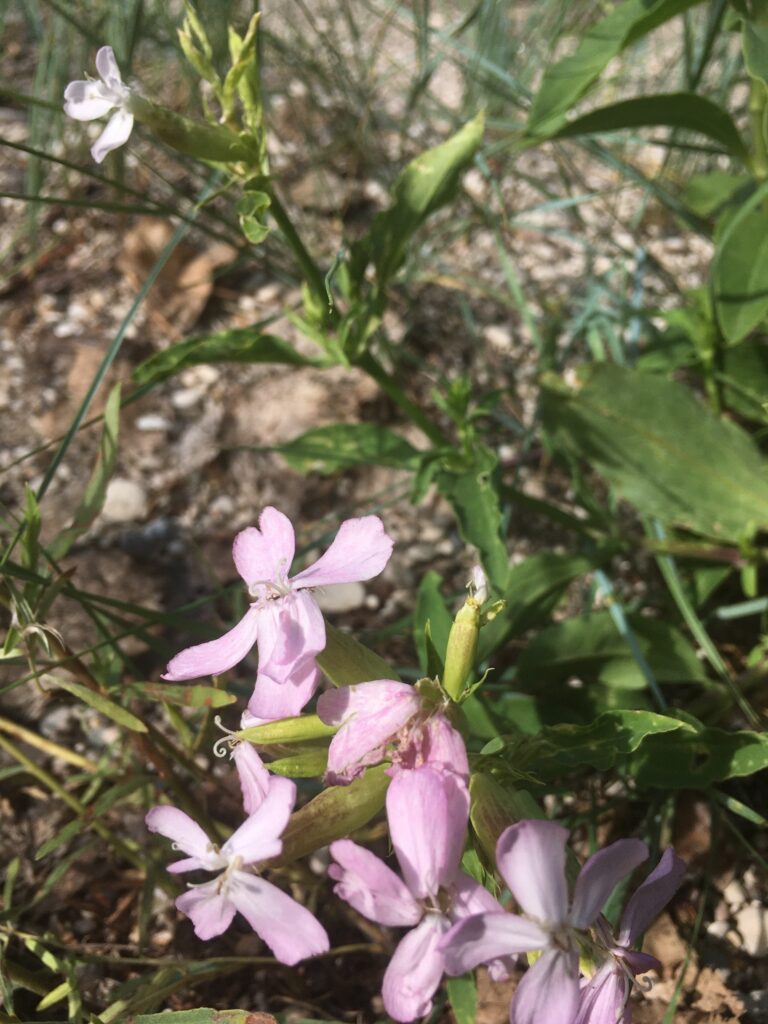
common soapwort (Saponaria officinalis)4

Saponaria officinalis / common soapwort

common name(s): common soapwort, bouncing-bet, crow soap, wild sweet William, soapweed

location: On Lake Manitoba south shore, Manitoba MB

licence: Photo by Brent Guin CC BY-NC learn about Creative Commons licenses

source: iNaturalist learn about iNaturalist You may download and use according to the copyright licence listed.


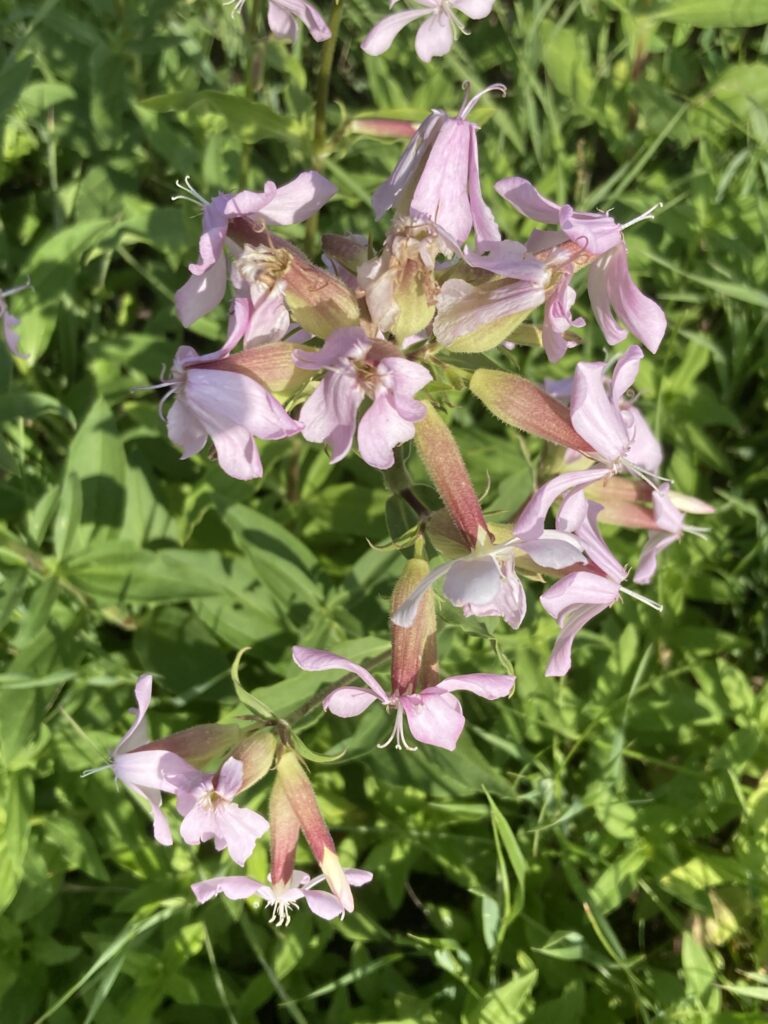
common soapwort (Saponaria officinalis)2

Saponaria officinalis / common soapwort

common name(s): common soapwort, bouncing-bet, crow soap, wild sweet William, soapweed

location: In Whiteshell Provincial Park, Manitoba MB

licence: Photo by BLinklater CC BY-NC learn about Creative Commons licenses

source: iNaturalist learn about iNaturalist You may download and use according to the copyright licence listed.


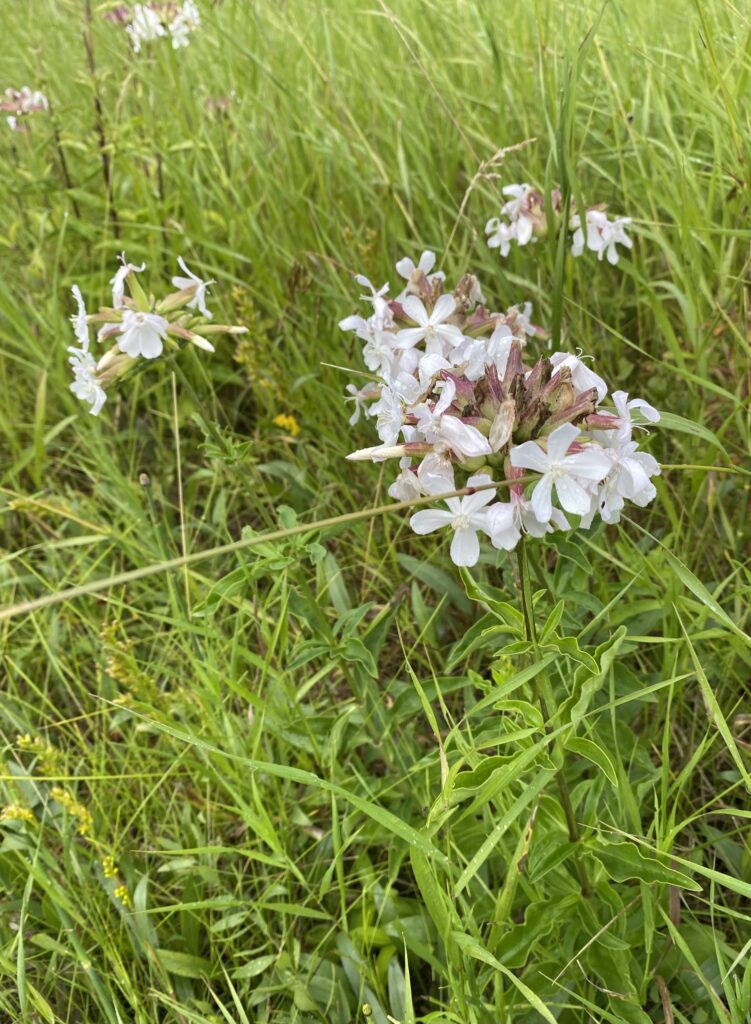
common soapwort (Saponaria officinalis)1

Saponaria officinalis / common soapwort

common name(s): common soapwort, bouncing-bet, crow soap, wild sweet William, soapweed

location: In Riding Mountain National Park, Manitoba MB

licence: Photo by Sean Frey CC BY-NC learn about Creative Commons licenses

source: iNaturalist learn about iNaturalist

You may download and use according to the copyright licence listed.


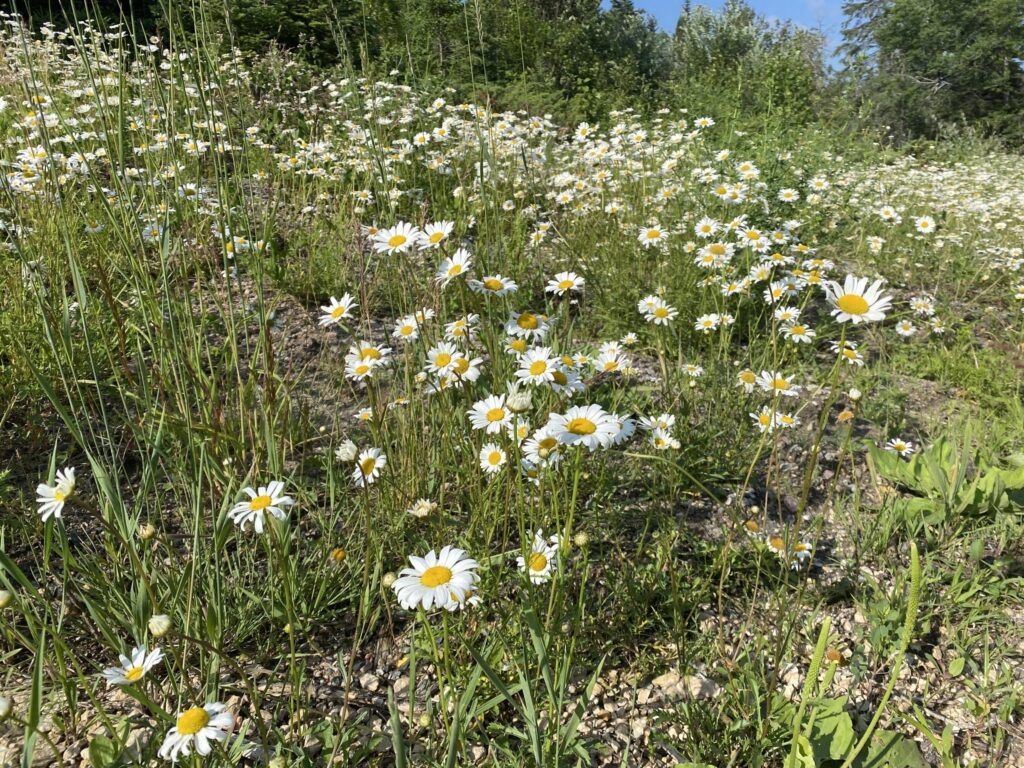
oxeye daisy / Leucanthemum vulgare2

Leucanthemum vulgare / oxeye daisy

common name(s): ox-eye daisy, oxeye daisy, dog daisy, marguerite (French: Marguerite commune), common marguerite

location: Whiteshell Provincial Park, Manitoba MB

licence: photo by cwgspeirs CC BY-NC learn about Creative Commons licenses (open new tab)

source: iNaturalist learn about iNaturalist (opens new tab)

You may download and use according to the copyright licence listed.